Ethernet Cables - CAT5e CAT6 CAT6A
Buy ethernet cables at trade prices from our network cable range, massive stocks with next day delivery.
Read more
Our range includes economy and full copper patch leads in 24AWG and 26AWG wire gauges, slim 30AWG and ultra slim 32AWG leads, unshielded UTP and shielded FTP, LSZH low smoke zero halogen and snagless patch leads, CAT8 leads for 25G and 40G, outdoor cables and multi-packs. Not sure which you need? Read our ethernet cable buying guide.
Shop by type
 CAT5e Economy121 products
 CAT5e Full Copper684 products
 CAT6 Economy91 products
 CAT8 Full Copper33 products
 CAT6 Full Copper844 products
 Outdoor Network Cables16 products
 Patch Lead Packs279 products
 CAT6A Full Copper372 products
 CAT5e Angled14 products
 CAT5e Flat Full Copper28 products
 CAT5e Crossover51 productsCAT6 Crossover6 products
 Network Extension Cables13 products
 Network Economiser6 products
Popular in Ethernet Cables
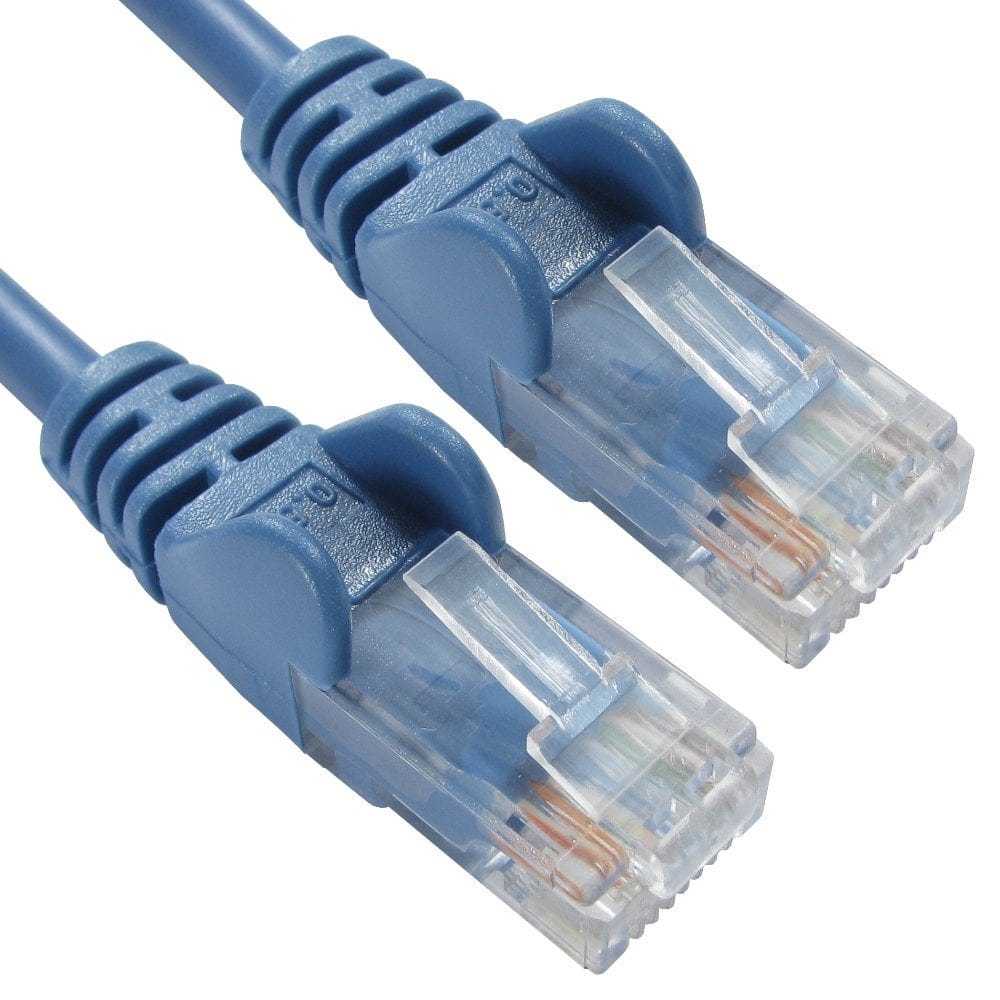
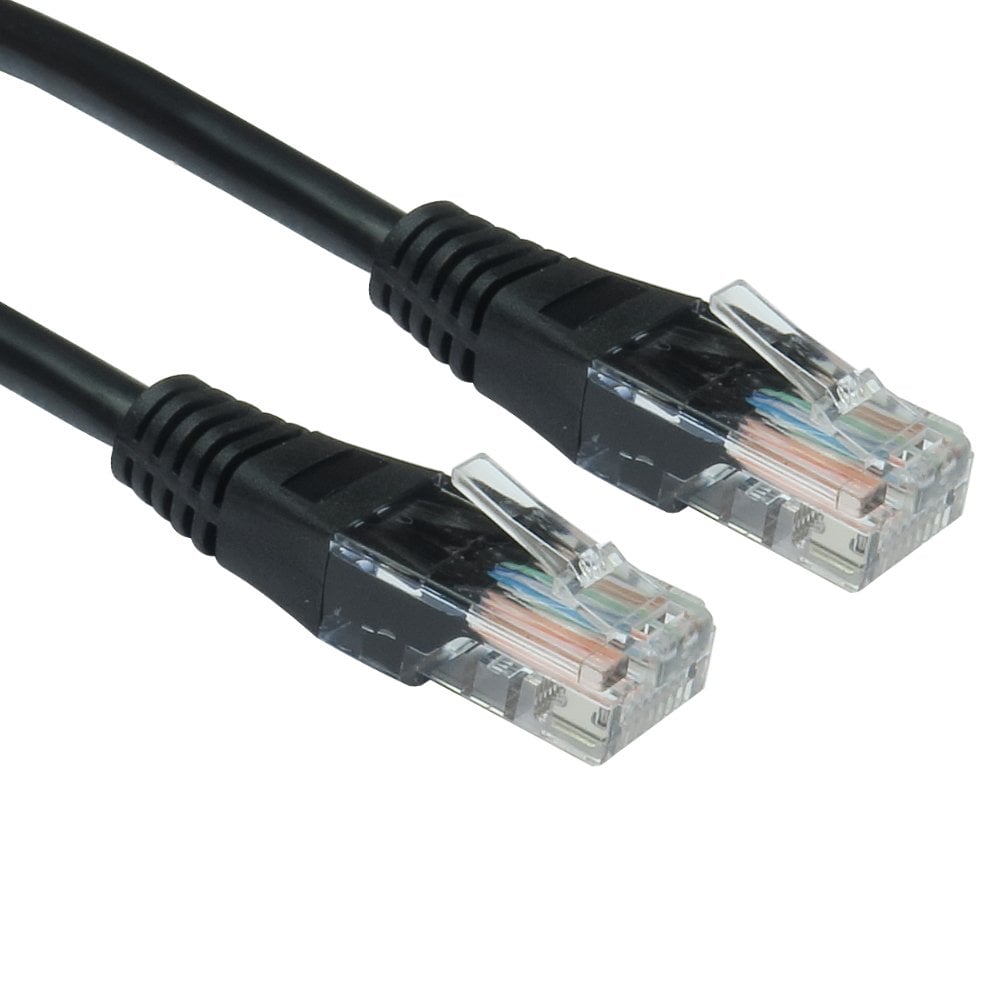
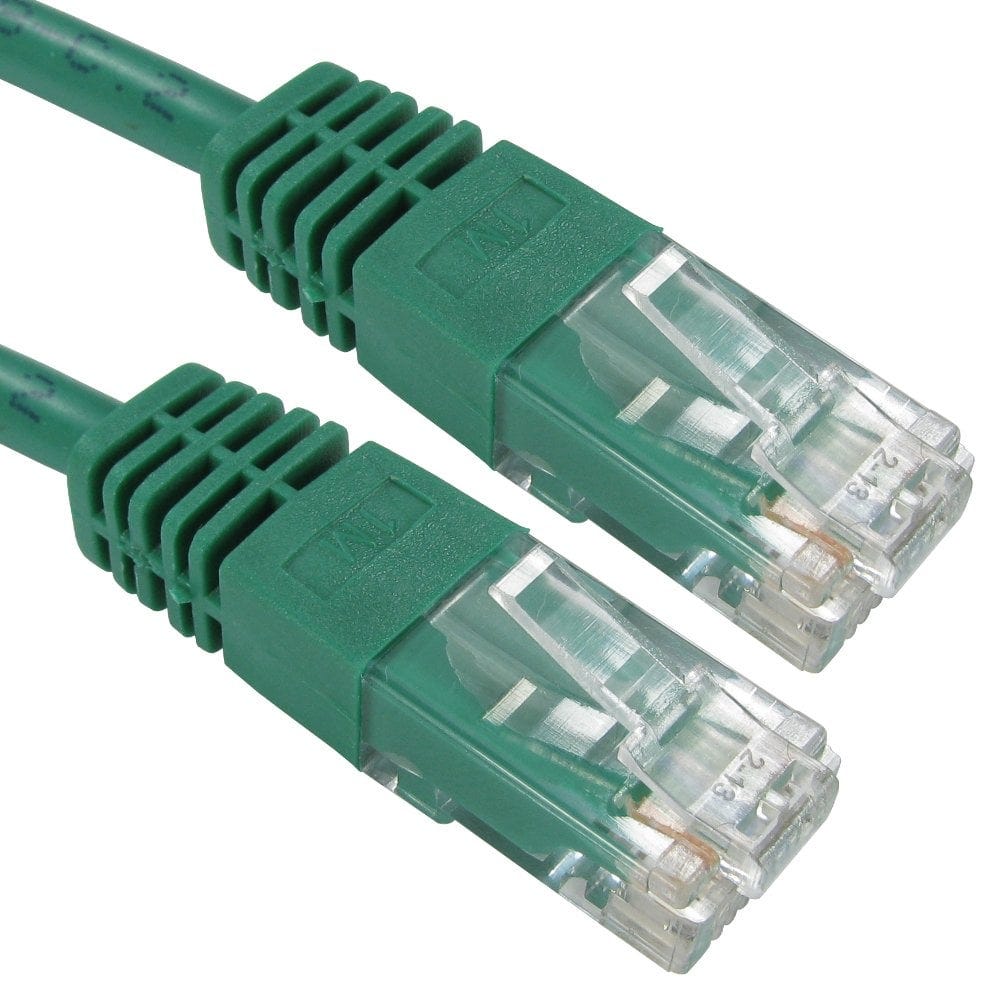
Ethernet Cable Buying Guide
CAT5e, CAT6 or CAT6A?
Ethernet cables are graded in categories (CAT) by the network speeds they are designed to carry. All three use the same RJ45 connector and are backwards compatible, so a newer cable will work with older equipment.
| CAT5e | CAT6 | CAT6A | |
|---|---|---|---|
| Maximum speed | 1 Gigabit | 1 Gigabit, or 10 Gigabit up to 55m | 10 Gigabit |
| Maximum length | 100m | 100m | 100m |
| Best for | Home and office broadband, PCs, TVs and games consoles | New installations, busy offices and HDMI over ethernet | 10 Gigabit networks, servers, NAS drives and future-proofing |
For typical home use, such as connecting a router to a smart TV or games console, a CAT5e cable is more than adequate as your broadband speed will be the limiting factor. CAT6 has tighter twisted pairs that give better resistance to crosstalk and interference, making it a good choice for new installations. For 10 Gigabit equipment choose CAT6A; all our CAT6A cables are shielded for extra protection against interference.
Full copper or economy?
Our Full Copper cables use pure copper conductors, which have the lowest resistance. They are the best choice for Power over Ethernet (PoE) devices such as IP cameras, VoIP phones and wireless access points, for longer runs and for HDMI over ethernet extenders.
Our Economy cables use CCA (copper clad aluminium) conductors, an aluminium core with a copper coating. They are a great value choice for short patch leads to computers, printers and routers. CCA has a higher resistance than pure copper, so economy cables are not recommended for PoE devices or longer runs.
24 AWG or 26 AWG?
AWG (American Wire Gauge) is the thickness of the copper wire: the lower the number, the thicker the wire. 24 AWG has lower resistance, so it is better for longer patch leads and PoE. 26 AWG is thinner and more flexible, which makes it ideal for short patch leads in busy patch panels and network cabinets.
Unshielded (UTP) or shielded (FTP)?
Unshielded UTP cable is right for most homes and offices. Shielded cable has a foil screen around the wire pairs that protects the signal from electrical interference near power cables, lighting, motors and machinery. For the full benefit, use shielded cables with shielded patch panels and sockets.
LSZH low smoke zero halogen
LSZH cables, also called LSOH, have a sheath that gives off very little smoke and no toxic halogen gases if it catches fire. They are often specified for offices, schools, hospitals, public buildings and data centres, so check your project specification.
Snagless patch leads
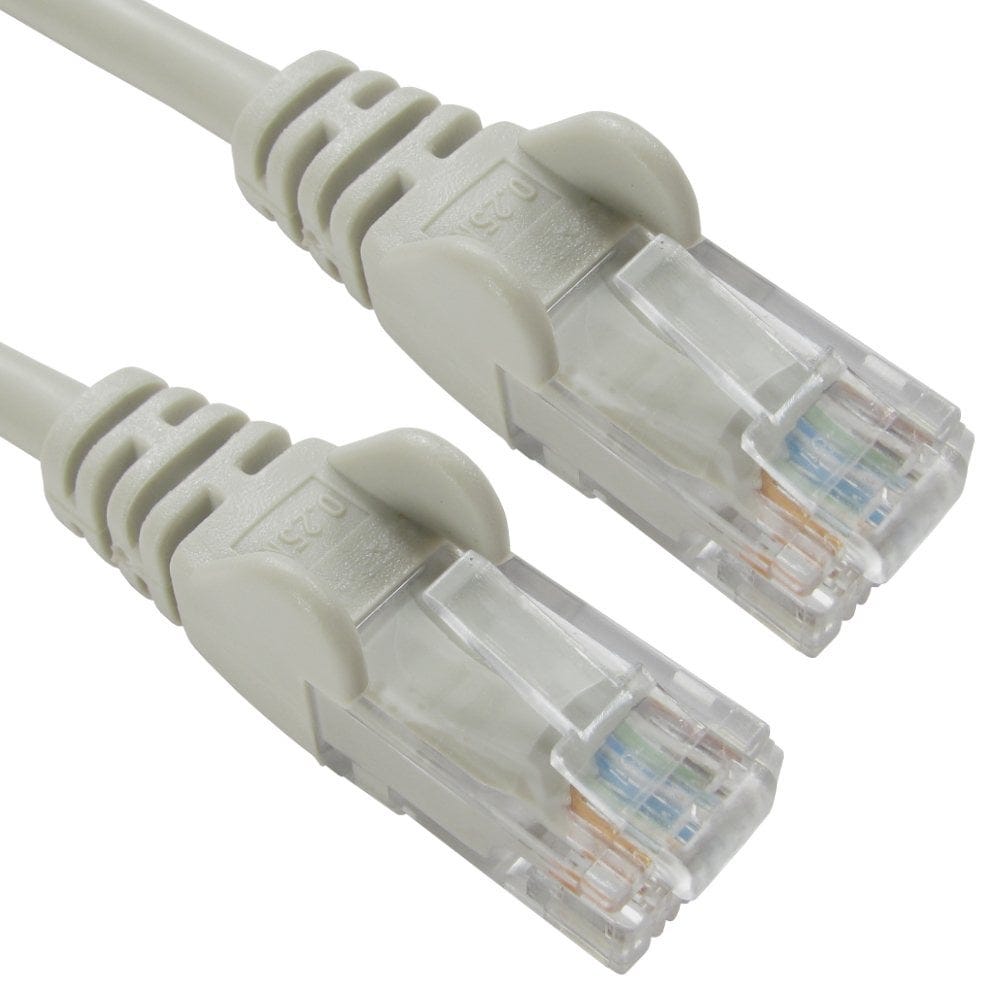
Snagless patch leads have a moulded boot that covers the RJ45 locking clip, so the clip can't catch and snap off when you pull a cable through a cabinet, desk or wall box.
Other cable types
- Angled - the connector is angled to fit tight spaces, such as behind a wall-mounted TV.
- Flat - a thin, flat cable that runs neatly under carpets, along skirting boards and under doors.
- Crossover - connects two computers, or two switches, directly without a switch in between. Most modern equipment detects this automatically and works with a standard cable, so crossover cables are mainly needed for older equipment.
- Extension cables - an RJ45 plug at one end and a socket at the other, to lengthen an existing cable.
- Network economisers - used in pairs, they carry two network connections over a single cable run, ideal where you only have one cable to a room. Each connection runs at up to 100 Mbps.
Choosing the right length
An ethernet connection can be up to 100m in total, including the patch leads at each end. Measure the route the cable will take rather than the straight-line distance and allow a little slack, but avoid large coils of spare cable. In network cabinets, short patch leads of 0.25m to 1m keep things tidy, and using a different colour for each type of connection, such as phones, cameras and computers, makes them easy to trace.
Frequently asked questions
Will a CAT6 cable make my internet faster?
Only if your current cable is the bottleneck. If your broadband is slower than 1 Gigabit, a good CAT5e cable already carries your full speed.
Can I use CAT6 cables with CAT5e equipment?
Yes. All categories use the same RJ45 connector and are backwards compatible; the connection simply runs at the speed of the slowest part.
Which cable do I need for PoE?
Choose one of our Full Copper cables. Our CAT5e, CAT6 and CAT6A full copper cables are all suitable for PoE; our CCA economy cables are not recommended for PoE.
Need help choosing? Call our team on 0207 100 6326 and we will be happy to advise.